
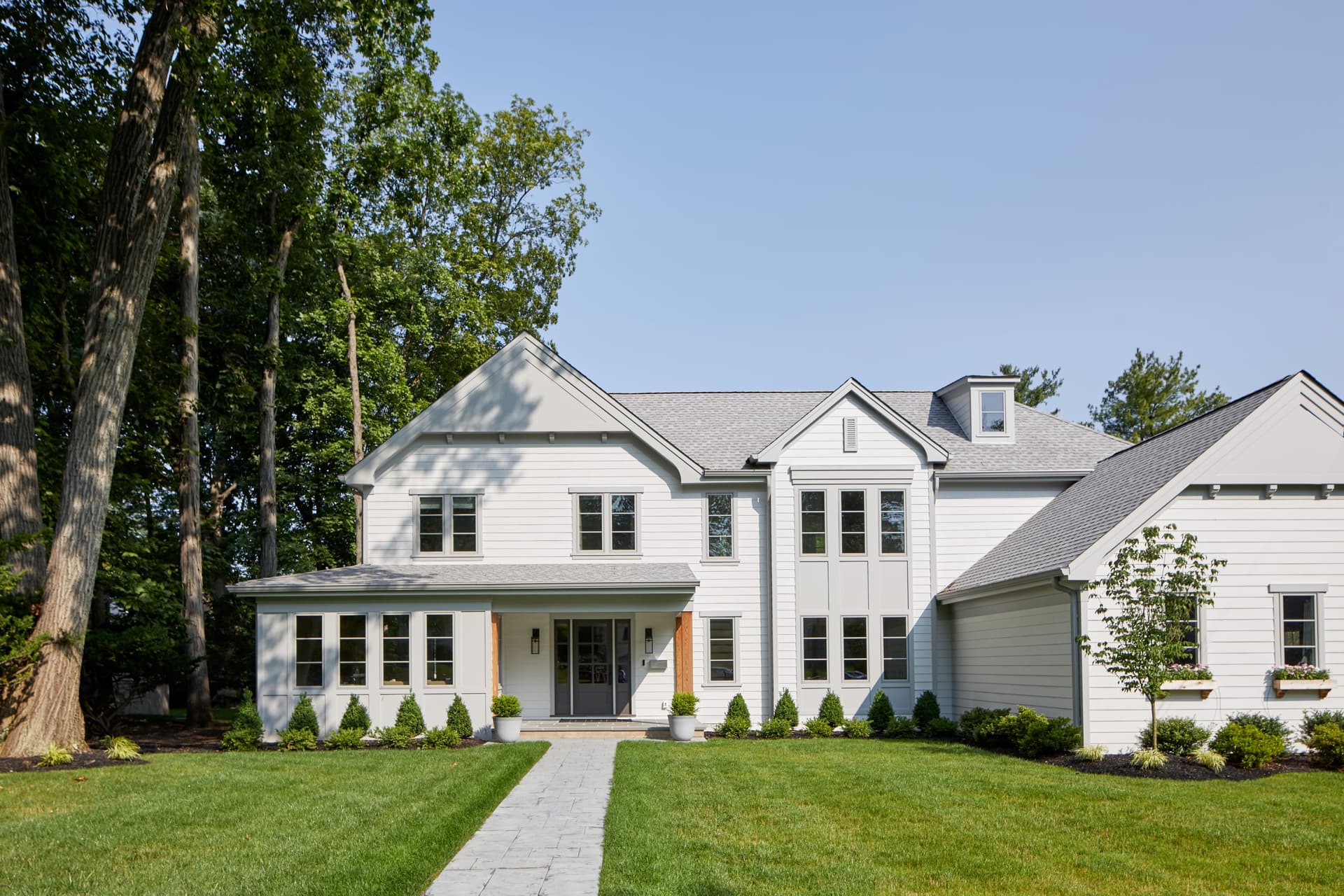
Journal · Planning
Renovate or Rebuild? How to Decide What's Right for Your New Jersey Home
What the existing structure can carry, and what belongs in the comparison.
If you love your neighborhood but the house no longer works, the question is bigger than which room to renovate. There is no universal answer: it depends on the existing structure, the changes you want, local approvals, and how much of the original home is worth keeping. Mike has written about how he weighs that decision; this is the feasibility side of the same question.
Start with what isn't working
Before anyone discusses finishes, identify the structural problems. Is the kitchen disconnected from family living? Are the bedrooms too small? Is the staircase in the wrong place? Is there no good connection to the yard?
Some of those resolve through a thoughtful reconfiguration; others need substantial structural change. A well-developed floor plan is the cheapest place to find out which.
When does renovation make sense?
Renovation is compelling when the structure is sound, the location and character are worth keeping, and the layout you want can be reached without disproportionate intervention. Existing architectural features are often difficult or expensive to recreate.
But opening walls reveals conditions that affect scope, schedule and budget. An early assessment has to look past the surface finishes.
When should you consider an addition?
An addition can give you the space you need while keeping most of the existing house — a larger kitchen, a primary suite, a mudroom, a better connection to outdoor living.
The real question is whether new and existing spaces will function as one home. Exterior massing, rooflines, circulation and the transitions between old and new matter as much as the square footage. More on that on our additions page.
When might rebuilding be the better option?
Rebuilding deserves consideration when the existing layout is fundamentally incompatible with the goals, when structural upgrades would be extensive, or when a renovation would retain very little of the original house.
A new build allows more freedom with room placement, building systems and performance. Demolition, zoning, setbacks, utilities, approvals and neighborhood context all have to be evaluated first — a rebuild is not automatically possible or preferable.
What should you actually compare?
More than the headline construction estimate. Design and engineering, site conditions, permits, temporary housing, contingency, long-term maintenance and the level of finish you expect all belong in the comparison.
Town-specific zoning and historic-district requirements can change the answer entirely. A project-specific feasibility and budget exercise is far more useful than a cost per square foot — which we have written about separately.
Why integrated planning matters
Architectural planning, exterior massing, floor-plan flow, construction and interior coordination can inform one another from the outset. A window location affects furniture, built-ins and drapery. A new opening affects both structure and circulation.
Resolving those relationships early is what keeps a project moving toward a coherent result. Clients are equally welcome to bring their own architect’s plans.
Questions this raises
Is it cheaper to renovate or rebuild in New Jersey?
It depends on the existing house, the scope, the site and the result you want. A targeted renovation is usually less extensive than a rebuild, but a major structural renovation narrows the gap. Ask for a project-specific comparison rather than relying on national averages.
Can I live at home during a major renovation?
Sometimes. Safety, access, utilities, dust and the work sequence decide whether it is practical, and it is a preconstruction planning conversation rather than an afterthought.
How do I weigh this against simply moving?
That is the question Renovate, Add On, or Build New? takes on directly, including the parts that are not technical — the neighborhood, and your tolerance for the disruption.
Considering a significant renovation, addition or custom home in Westfield, Summit, Chatham, Short Hills or nearby? Talk with us about the possibilities before committing to a direction.