
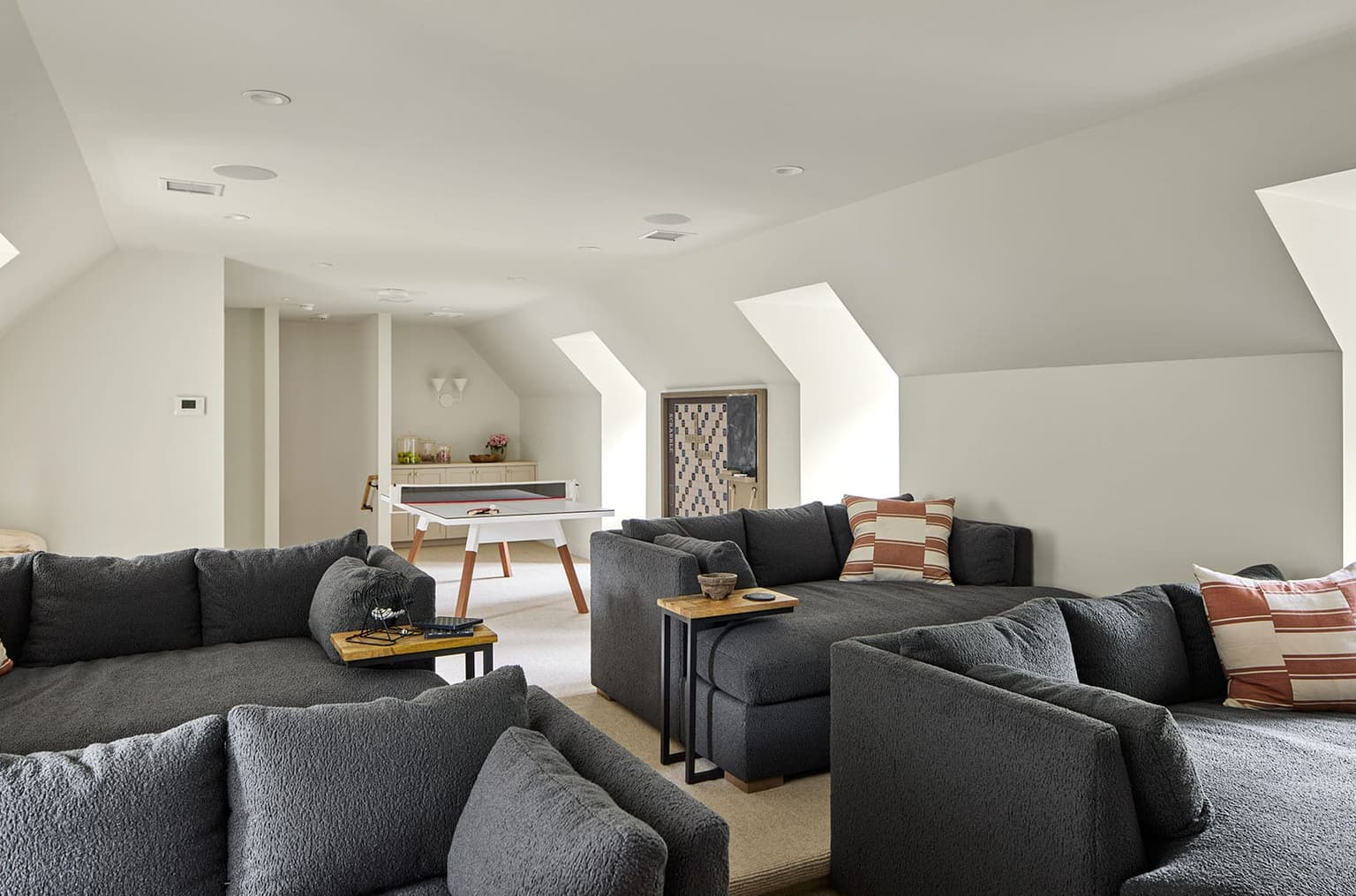
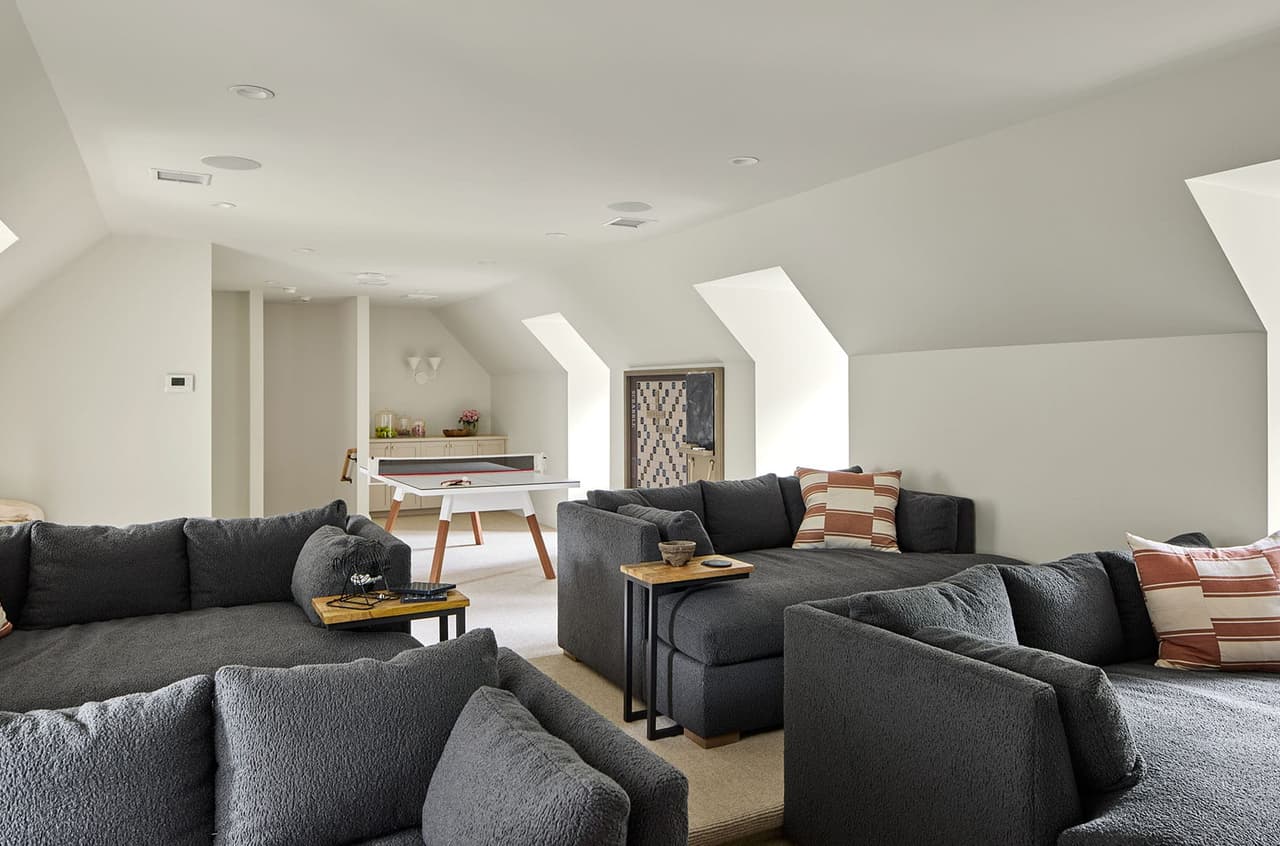
When you think of a home theater (besides the thought of a luxury home enhancement), the basement probably comes to mind. For years, basements have been the go-to spot for setting up that perfect movie-watching space. But if you’re looking to build a home theater, we’re suggesting that it’s time too break away from that tradition. Here’s why your home theater deserves a spot on the second floor or even up in the attic.
-
Natural Light Control
One of the main reasons basements were popular for home theaters was the lack of windows, which meant no pesky natural light to interfere with screen visibility. But with advancements in blackout shades and window treatments, you can easily control light in any room. Plus, when you’re not using the theater, you can let the sunshine in and make the space more versatile – it can do double duty as a game room, lounge or a playroom.
-
Better Ventilation and Climate Control
Basements can be damp, cold, and sometimes musty. Whether an upstairs room gives better air quality and temperature control depends on the rooms involved and the systems serving them, so it is worth assessing rather than assuming. Modern HVAC systems and smart thermostats make it easy to create a comfortable environment, no matter where your theater is located.
-
Enhanced Acoustics
A basement is quiet partly because it is surrounded by earth and structure; an upstairs room is not, and treatment alone does not make up the difference. Two different problems are worth separating here. Acoustic treatment — panels, soft furnishings, room shape — changes how the room sounds inside it. Isolation, which keeps sound from traveling to the rest of the house, is structural: mass, decoupling and sealing, decided during construction. Treatment alone will not isolate a room, and an upstairs theater usually needs the structural work specified early.
-
Maximizing Space Efficiency
Many basements double as storage spaces, laundry rooms, or even home gyms. Moving your theater upstairs can free up valuable basement real estate for these purposes. Plus, attic spaces often go unused and can be transformed into an amazing, dedicated theater room.
-
Better Integration with Living Spaces
An upstairs home theater can be more seamlessly integrated with the rest of your living areas. Imagine having your theater room just a few steps away from your living room or kitchen, making it perfect for entertaining guests or family movie nights.
-
Enhanced Social Experience
Moving your home theater to the second or third floor can significantly enhance the social dynamics of your home. Here’s how:
An upstairs theater is closer to main living areas, making it easier to transition from dinner parties or casual get-togethers to a movie screening. Your guests won’t feel like they’re being tucked away in a dark, isolated basement. This is especially important with younger kids too!
An upstairs theater can double as a hangout spot. During the day, it can be a cozy reading nook or a space for board games and social activities. This versatility makes it a hub for social interaction, not just movie nights.
Being on the same floor as other living spaces encourages more spontaneous social interactions. It’s easy for family members to join in on a movie or TV show when they’re already on the same floor.
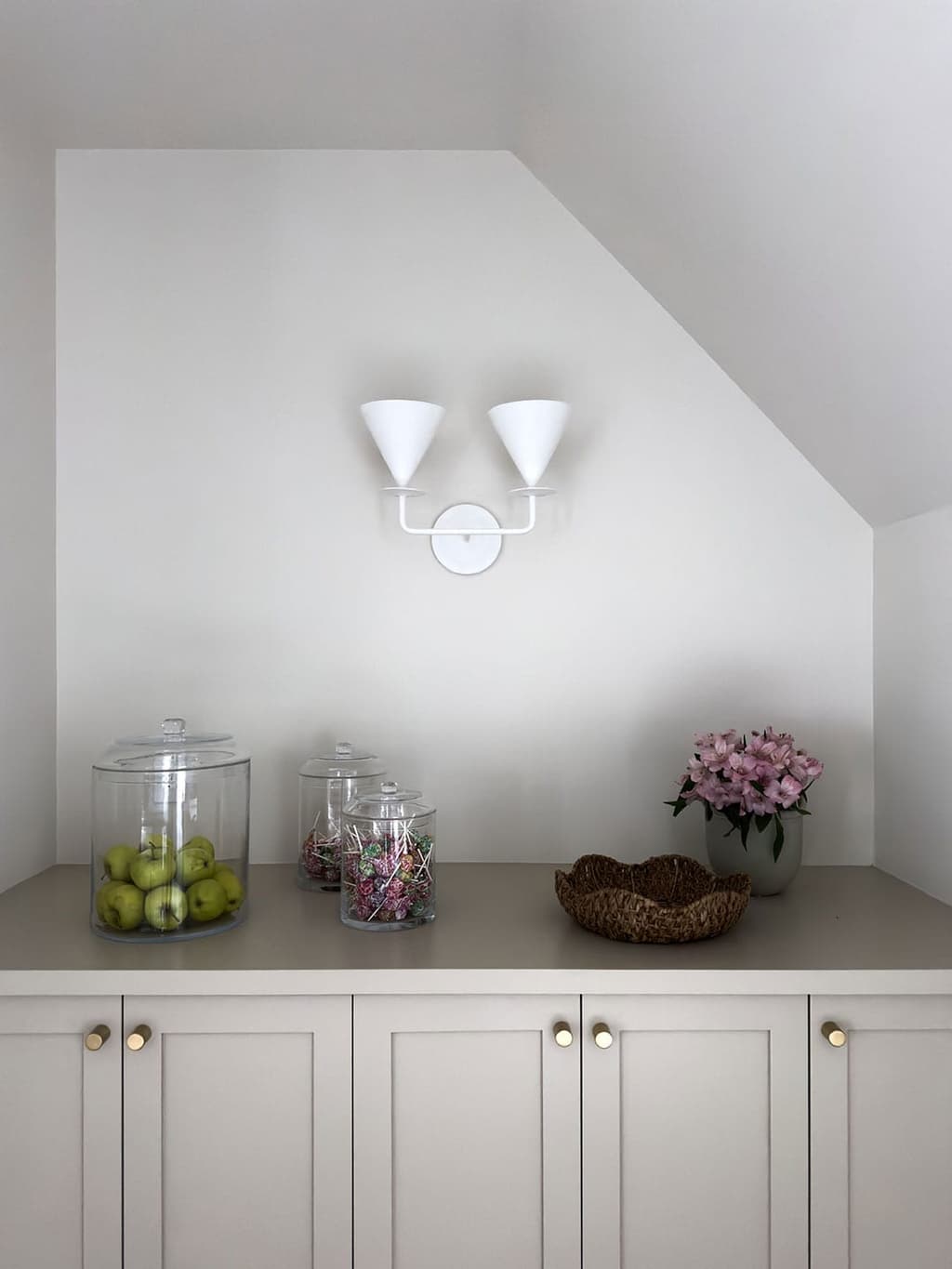
Easier Snack and Drink Access: Proximity to the kitchen means you can quickly grab snacks and drinks without missing much of the action. This convenience can make hosting more enjoyable and stress-free.
Making the Move
If you’re considering relocating your home theater, here are a few tips to get started:
- Plan Your Space: Choose a room with enough space for seating, a large screen, and all your
- Separate treatment from isolation: Heavy curtains, acoustic panels and rugs improve how the room sounds inside it. Keeping sound out of the rest of the house is structural — mass, decoupling and sealing — and has to be specified before the walls close.
- Invest in Blackout Shades: These will help you control light and create that perfect dark theater environment when needed.
- Upgrade Your Seating: Comfortable seating is crucial for a great theater Consider recliners or a cozy sectional.
Moving your home theater upstairs is a bold move, but one that can greatly enhance your home’s functionality, social dynamics, and your viewing pleasure. So, leave the basement behind and take your movie nights to a whole new level!
Questions this raises
Is the basement always the best place for a home theater?
No. Evaluate light control, sound separation, room dimensions and how the household will use the space. A basement or an above-grade room may work, depending on the home. The location should follow the requirements rather than a default assumption.
What should be coordinated before construction?
Plan the layout, equipment, wiring, lighting, comfort and sound-control needs together. Those decisions can affect walls, ceilings and systems. MRC includes specialized rooms within a significant residential project.